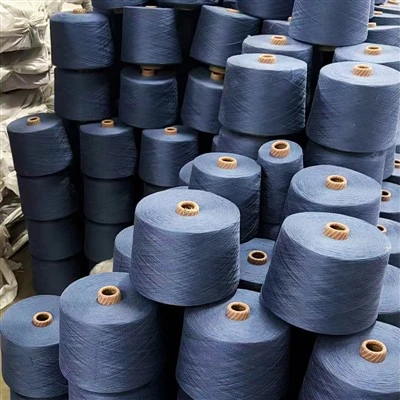
Yarn is a long continuous length of interlocked fibres, used in sewing, crocheting, knitting, weaving, embroidery, ropemaking, and the production of textiles. Thread is a type of yarn intended for sewing by hand or machine. Modern manufactured sewing threads may be finished with wax or other lubricants to withstand the stresses involved in sewing. Embroidery threads are yarns specifically designed for needlework. Yarn can be made of a number of natural or synthetic materials, and comes in a variety of colors and thicknesses (referred to as "weights"). Although yarn may be dyed different colours, most yarns are solid coloured with a uniform hue.

Advantages of Yarn
01
Comfort
Consumers of the current generation are increasingly conscious of the importance of comfort in their clothing. Of all, if you’re going to wear yarn, comfort is pertinent! Yarn is midway between cotton and cashmere in terms of fabric softness. When you rub it against your skin, it feels light and velvety.
02
Durability
The lengthy, stable polymers in yarn make this fabric tough and durable. Yarn, as a result, keeps its shape nicely and does not readily stretch out. Despite its strength, 100% yarn is a soft, lightweight fabric suitable for a wide range of garment designs.
03
Elasticity
100% yarn snaps back into form after stretching due to its robust nature. However, the cloth has some inherent give to it. This permits you to move around freely while wearing yarn clothing.
04
Versatility
Yarn’s ultimate flexibility is found in its ability to mix with different textiles. Blended textiles combine the benefits of several different types of fibers into a single fabric.
-
![Fancy Dyed Colorful Blended Cotton Acrylic Yarn]() Fancy Dyed Colorful Blended Cotton Acrylic Yarn🏭 Factory Direct SupplyProduced by an experienced yarn manufacturer with stable quality and export standards.🎨 Custom Yarn Solutions (OEM / ODM)Material, count, color, texture, and packaging can be customized based on project needs.🧶read more
Fancy Dyed Colorful Blended Cotton Acrylic Yarn🏭 Factory Direct SupplyProduced by an experienced yarn manufacturer with stable quality and export standards.🎨 Custom Yarn Solutions (OEM / ODM)Material, count, color, texture, and packaging can be customized based on project needs.🧶read more -
![100% Acrylic Wool Yarn]() 100% Acrylic Wool YarnFactory DirectSupport factory inspectionSupport OEM/ODMSupport sample serviceread more
100% Acrylic Wool YarnFactory DirectSupport factory inspectionSupport OEM/ODMSupport sample serviceread more -
![Black Blended Yarn Polyester Viscose Yarn]() Black Blended Yarn Polyester Viscose YarnFactory DirectSupport factory inspectionSupport OEM/ODMSupport sample serviceread more
Black Blended Yarn Polyester Viscose YarnFactory DirectSupport factory inspectionSupport OEM/ODMSupport sample serviceread more -
![Recycled Cotton Polyester Blend Yarn]() Recycled Cotton Polyester Blend YarnFactory DirectSupport factory inspectionSupport OEM/ODMSupport sample serviceread more
Recycled Cotton Polyester Blend YarnFactory DirectSupport factory inspectionSupport OEM/ODMSupport sample serviceread more -
![Eco-Friendly 100% Merino Wool Hand Knitting Yarn]() Eco-Friendly 100% Merino Wool Hand Knitting Yarn🧶 100% Merino Wool YarnSoft, breathable and naturally eco-friendly, ideal for hand knitting, crochet and hand-dye projects.🌿 Pure & Versatile MaterialSmooth texture with excellent warmth and elasticity, suitable for garments, scarves andread more
Eco-Friendly 100% Merino Wool Hand Knitting Yarn🧶 100% Merino Wool YarnSoft, breathable and naturally eco-friendly, ideal for hand knitting, crochet and hand-dye projects.🌿 Pure & Versatile MaterialSmooth texture with excellent warmth and elasticity, suitable for garments, scarves andread more -
![Acrylic Cotton Crochet Yarn]() Acrylic Cotton Crochet Yarn🏭 Factory Direct SupplyProduced by an experienced yarn manufacturer with stable quality and export standards.🎨 Custom Yarn Solutions (OEM / ODM)Material, count, color, texture, and packaging can be customized based on project needs.🧶read more
Acrylic Cotton Crochet Yarn🏭 Factory Direct SupplyProduced by an experienced yarn manufacturer with stable quality and export standards.🎨 Custom Yarn Solutions (OEM / ODM)Material, count, color, texture, and packaging can be customized based on project needs.🧶read more -
![30Nm/2 Wholesale Worsted Yarn 100% Acrylic Yarn]() 30Nm/2 Wholesale Worsted Yarn 100% Acrylic Yarn30Nm/2 Wholesale Worsted Yarn 100% Acrylic YarnYears of import and export experienceSupport customized servicesread more
30Nm/2 Wholesale Worsted Yarn 100% Acrylic Yarn30Nm/2 Wholesale Worsted Yarn 100% Acrylic YarnYears of import and export experienceSupport customized servicesread more -
![Acrylic Yarn For Clothing]() Acrylic Yarn For Clothingacrylic yarn for clothingYears of import and export experienceSupport customized servicesread more
Acrylic Yarn For Clothingacrylic yarn for clothingYears of import and export experienceSupport customized servicesread more -
![2/28Nm 50%merino Wool 50%acrylic Wool Blended Yarn]() 2/28Nm 50%merino Wool 50%acrylic Wool Blended YarnHot Sale 2/28Nm 50%merino Wool 50%acrylic Wool Blended Yarn Merino Wool Yarn for Seaterread more
2/28Nm 50%merino Wool 50%acrylic Wool Blended YarnHot Sale 2/28Nm 50%merino Wool 50%acrylic Wool Blended Yarn Merino Wool Yarn for Seaterread more -
![Wholesale 100% Polyester Yarn High Quality 21s 45s 32s]() Wholesale 100% Polyester Yarn High Quality 21s 45s 32sMaterial:100% AcrylicYarn Type:SpunPattern:RawStyle:Core Spun YarnTechnics:RING SPUN, Ring spunFeature:Anti-Insects, Anti-pilling, High Tenacity, anti-pilling,anti-insects, heat resistance, alkali-resistanceUse:Knitting,read more
Wholesale 100% Polyester Yarn High Quality 21s 45s 32sMaterial:100% AcrylicYarn Type:SpunPattern:RawStyle:Core Spun YarnTechnics:RING SPUN, Ring spunFeature:Anti-Insects, Anti-pilling, High Tenacity, anti-pilling,anti-insects, heat resistance, alkali-resistanceUse:Knitting,read more -
![Good Quality HB 100 Acrylic Yarn Environmental Friendly Dyeing On Cone]() Good Quality HB 100 Acrylic Yarn Environmental Friendly D...Quick Details Material:100% Acrylic Yarn Type:Spun Pattern:Dyed Style:Core Spun Yarn Technics:RING SPUN Feature:High Tenacity, Flame Retardant Use:Sewing, Knitting Twist:2 Yarn Count:28S/2 Place of Origin:China Brand Name:SHENGRUNread more
Good Quality HB 100 Acrylic Yarn Environmental Friendly D...Quick Details Material:100% Acrylic Yarn Type:Spun Pattern:Dyed Style:Core Spun Yarn Technics:RING SPUN Feature:High Tenacity, Flame Retardant Use:Sewing, Knitting Twist:2 Yarn Count:28S/2 Place of Origin:China Brand Name:SHENGRUNread more -
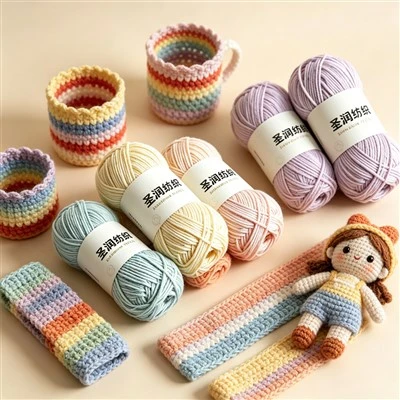
![100% Acrylic Yarn DIY Knitted Crochet For Doll And Sweater]() 100% Acrylic Yarn DIY Knitted Crochet For Doll And Sweater100% ACRYLIC YARN DIY KNITTED CROCHET FOR DOLL AND SWEATER Quick Details Feature: Moisture-Absorbent, Anti-pilling Yarn Type: Spun Yarn Count: 32 Color: Customize Colour Usage: Dress MOQ: 2000kgs Composition: acrylic Certificate: GRSread more
100% Acrylic Yarn DIY Knitted Crochet For Doll And Sweater100% ACRYLIC YARN DIY KNITTED CROCHET FOR DOLL AND SWEATER Quick Details Feature: Moisture-Absorbent, Anti-pilling Yarn Type: Spun Yarn Count: 32 Color: Customize Colour Usage: Dress MOQ: 2000kgs Composition: acrylic Certificate: GRSread more


Why Choose Us
Our factory
Shandong Shengrun Textile Co.,LTD.was established in June 2000, with registered capital RMB 43 Million and 30 thousand and total assets RMB 190 million. Shandong Shengrun Textile Co.,LTD. possesses 400 domestic advanced looms, 18 Japanese WEMS computer shuttle flying embroidery machines, 40,000 spindles for spinning cotton yarn, and several advanced quilting and seaming lines. The annual capacity is 12,000 tons of different kind of yarn, 15 million meters of grey fabrics, 1.5 million meters of embroidery , over 2000 tons of all kinds of towel blankets and 500,000 sets of home textiles.
Production market
Our customers are from Europe,North America, Africa, Asean coutries , the Middle east and dozens of other countries. After continuous expansion and extension, we formed a complete industry chain including cotton spinning and processing , ho usehold textiles manufacture and domestic and overseas sales. In the year of 2013, the 600 million sales revenue came true.
Our certifications
Shandong Shengrun Textile Co.,LTD. took the lead in passing ISO9001:2008 International Quality Management Systerm, ISO14001:2004 Environment Management Systerm ,OHSAS18001:2007 Occupation Health Satety Management Systerm treble identification.At the same time, Shengrun brand was affirmed as Shandong Famous Brand, CCTV Ranklist Brand, Shandong Famous Trademark,China Well-known Trademark.
Our service
Our company proactively provides customers with relevant product knowledge and guides customers to purchase products that best suit their needs.We enthusiastically introduce and display products for our customers, explain in detail how to use products, patiently help customers select products, provide users with product technical advice, confirm user needs, provide users with complete solutions, etc., and answer customer questions.Our company provides customers with a variety of services and return visits aimed at bringing their products to play their due role and facilitating customers after they purchase their products.
Materials of Yarn


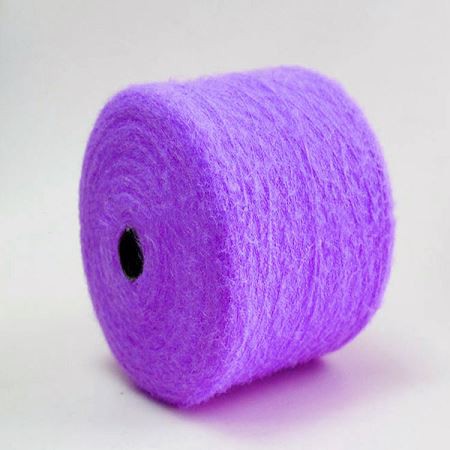

Cotton
Flyer spinning of cotton.The most common plant fiber is cotton, which is typically spun into fine yarn for mechanical weaving or knitting into cloth.
Silk
Silk is a natural protein fiber, some forms of which can be woven into textiles. The protein fiber of silk is composed mainly of fibroin and is produced by the larvae of the moth Bombyx mori.
Linen
Linen is another natural fiber with a long history of use for yarn and textiles. Linen fibers are derived from the flax plant.
Other plant fibers
Manila hemp warp yarns being prepared for weaving in a modern textile factory. Other plant fibers which can be spun include bamboo, hemp, maize, nettle, and soy fiber.
Animal fibers
The most common spun animal fiber is wool harvested from sheep. As long fibers make better yarn, sheep have been bred over time to produce longer fibers. This increases the need for shearing to prevent pests and overheating. Other animal fibers used include alpaca, angora, mohair, llama, cashmere, and silk. More rarely, yarn may be spun from camel, yak, possum, musk ox, vicuña, cat, dog, wolf, rabbit, bison, or chinchilla hair, as well as turkey or ostrich feathers. Natural fibers such as these have the advantage of being slightly elastic and very breathable while trapping a great deal of air, making for some of the warmest fabrics.
Synthetic fibers
Some examples of synthetic fibers that are used as yarn are nylon, acrylic fiber, rayon, and polyester. Synthetic fibers are generally extruded in continuous strands of gel-state materials. These strands are drawn (stretched), annealed (hardened), and cured to obtain properties desirable for later processing.
Synthetic fibers come in three basic forms: staple, tow, and filament. Staple is cut fibers, generally sold in lengths up to 120 mm. Tow is a continuous "rope" of fibers consisting of many filaments loosely joined side-to-side. Filament is a continuous strand consisting of anything from one filament to many. Synthetic fiber is most often measured in a weight per linear measurement basis, along with cut length. Denier and Dtex are the most common weight to length measures. Cut-length only applies to staple fiber.
Different Types of Yarns
Yarns can be grouped into two main categories based on the type of fibers – natural or synthetic. Natural fibers are again divided into two groups namely cellulose fiber and protein fiber.
Cellulose fibers
Cellulose fiber comes from plants and the most commonly used cellulose fiber is cotton. Other sources of cellulose fiber are jute, bamboo, hemp, flax, sisal, etc
Protein fibers
Protein fibers are sourced from insects and animals. The most famous of them are wool (from animals) and silk (from insect larvae ). Some other sources are goats, alpacas, llamas, rabbits, etc.
Synthetic fibers
Synthetic fibers are polymers found in natural gas or by-products of petroleum. They are made from acrylic or polyester or nylon. Nylon yarns are also called polyamide yarns
Blended yarns
Nowadays, natural and synthetic yarns are spun together to get the best characteristics of both. Blended yarns consist of two or more type of fibers. Blending combines the desirable qualities of different fibers. Thus you have many blends like cotton and polyester where you get the softness of cotton and longevity of polyester. Blended yarns can be made of spun yarns or filament yarns or a mixture of both.
Linen yarns
There are two main types of linen yarn called tow and line. Tow linen yarn is spun from short fibers and is rather coarse in nature but has greater absorbency. Line linen is made up of longer fibers about 15 inches in length, so it is smoother. They are soft, shiny and a common example of fabric made from this yarn is fine table linen. Other linen yarns are wet spun linen and dry spun linen.
Woolen and worsted yarns
Woolen yarns are made of carded yarns and are fuzzy and bulky. Eg: Tweed. Worsted yarns are spun from fibers that have been combed; they are lightweight; these yarns are used for knitting.
What Is the Yarn Used For?
Yarn is a versatile material with a wide range of applications in our daily lives. As we reach the final stop of our journey, let’s explore how yarn enriches our everyday experiences. Yarn finds frequent use in textile projects, where it is employed in various crafting techniques to create diverse fabrics.
Woven fabrics
By utilizing weaving machines and employing different weaving techniques, fabrics with distinct texture features are produced. These fabrics are then brought to life through creative designs, taking the form of clothing, curtains, bed sheets, tablecloths, as well as scarves, handkerchiefs, ties, and more. Unique weaving methods can also imbue fabrics with stunning patterns.
01
Knitting
You’ve likely witnessed mothers knitting scarves or sweaters using two knitting needles. The yarn we are discussing here are the key ingredients. Skillful hands manipulate and combine the yarn in different ways to create elastic fabrics or garments. Various knitting techniques can give them unique shapes, designs, and patterns. You can also learn specific techniques to make gloves, socks, hats, and scarves, and share warmth with others.
02
Crocheting
Yarn can also be utilized in this knit-like technique to fashion thick and cozy blankets, bags, and various decorative accessories. Unlike the two knitting needles, crocheting employs a single hook-tipped needle. Similarly, it allows for adjusting the yarn arrangement to achieve an array of patterns and designs.
03
Embroidery
The fusion of yarn and needles embellishes textiles with exquisite patterns. It can adorn a range of clothing, accessories, and home goods. The smooth texture of the yarn leaves minimal marks on the fabric surface while creating precise and delicate decorative stitches, resulting in charming patterns.
04
Craft making
Yarn can be transformed into an assortment of ornaments using decorative knotting techniques, perfect for embellishing walls, plants, jewelry, and more. These creations feature diverse patterns and textures. Combining yarn of different colors and textures opens up further possibilities for crafting, such as tassels, flower wreaths, ropes, and much more.
05
Weight
Find a yarn that’s a comparable weight to what’s called for in the pattern. If the pattern yarn is a worsted, find another worsted; if it’s a fingering, find another fingering. If the pattern doesn’t say a weight but only lists a particular yarn, look up the yarn specified in the pattern to find out more about it. What words like “worsted” and “fingering” mean can vary a lot in practice, so it can be helpful to check the suggested gauge of the yarn listed in the pattern and try to match that.
Fibre characteristics
Find a yarn with similar fibre content to the yarn used in your pattern. Think about the properties of each fibre rather than trying to exactly match the content. If you want to use fibres with different characteristics than what the designer used, consider what impact that will have on your fabric. I recommend diving into clara parkes knitter’s book of yarn if you want to learn more about this topic.
Construction
Find a yarn that has a similar construction to the one called for in your pattern. Spinning preparation, like woolen or worsted spun, number of plies, and tightness of twist can all make a big difference. If the pattern calls for a chain- construction alpaca blend, don’t try a 3-ply alpaca yarn just because the weight and fibre are the same unless you really want more drape and less elasticity.
Swatch
Once you’ve found a candidate yarn (or perhaps a few candidates), make a large swatch (at least 6 in/15 cm square) in the stitch pattern called for in the pattern and using the needles you expect to use for the project. If the project is in the round, work your swatch in the round. If it’s flat, work a flat swatch. Then wash your swatch and let it dry before evaluating it. If it wants to curl or if it needs to be stretched (like lace), pin it to flatten or open it up. (here’s a tutorial on swatching in the round if you need more info about that.)
Evaluate your swatch
Measure the number of stitches and rows in 4 in/10 cm of fabric. Do this in several places around your swatch to get an accurate measurement. Because your swatch is 6 in/15 cm square, you should always have some space on the edges that you’re not measuring because those edges can be get skewed and mess up your result. Does the gauge you’re getting match the gauge called for in the pattern? If not, switch needles and swatch again until you’re able to achieve the pattern gauge. Hard truth: If you’re not able to achieve pattern gauge, you should probably choose a different yarn unless you just love doing a ton of math to alter a pattern. Yay you got gauge! Now really look at the fabric. Pick it up and toss it around a bit. Do you like it? Look at the drape and density. Does it behave the way you want your finished project to behave? Is the stitch definition as clear as you’d like? Is it as shiny or as matte as you want? Don’t skip this part because you’re probably going to be spending a lot of time with this fabric, so it’s really important that you actually like it. Make another swatch in a different yarn. Making many swatches can be the key to a successful project. Even if you’re pleased with your first one, maybe work up another swatch in a different yarn so you can compare the two. You may like the second one even more, and you’ll be educating yourself as a knitter. Try to practice being okay with it if your first idea doesn’t work out. It hurts to buy a yarn for a specific project and then realize it’s not a good fit, but you’ll be happier with your finished projects in the long run if you can accept the reality that sometimes things don’t work out how we hoped. That yarn will be great for something even if it isn’t the right thing for this project.
Label your swatch
Label and keep every swatch. I tend to just write this info on the yarn label and then tie it to one of my swatch tails. That way I have the name, colour, and dye lot along with my personal notes. Be sure to list exactly which needles you used, not just size, but brand and style too since the needle material and pointy-ness of the tips can make a big difference in gauge. And write down the gauge so you don’t have to measure it again in the future. Next time you’re thinking of making something, you can pull out your old swatches for inspiration. You may even have one already done that would work for that next project!
Instructions On How to Wash Yarn
Begin by gathering all necessary materials: a mild detergent or shampoo, a large bowl or sink, and a towel. Make sure your workspace is clean and dry. Fill your sink or bowl with lukewarm water, not exceeding 30°C, this temperature ensures the yarn fibers do not shrink or felt. Integrate a small amount of detergent or shampoo into the water.
Submerge the yarn in this solution, gently compressing it to ensure the soapy water penetrates through. Avoid vigorous agitation or wringing to prevent felting and tangling.
Let the yarn rest in the water-soap mix for up to 15 minutes, this step allows any dirt or grime to loosen. Post the rest period, drain the soapy solution, gently squeeze the yarn to remove excess soapy water, but do not wring.
Refill the sink with clean, lukewarm water for rinsing. Put the yarn back into the clean water, swish it gently to ensure soap residue washes away. Repeat as necessary until the water runs clear.
Remove the yarn from the final rinse, again, gently squeezing out excess water. Roll the yarn in a dry towel to soak up additional moisture. It’s essential not to twist or wring the yarn, as this can lead to stretching or distorting the fibers.
Lay out your yarn flat to dry; a mesh drying rack is preferable, facilitating airflow. Avoid direct sunlight or heat sources. These steps provide a basic guide to washing and caring for your yarn, preserving its quality and life.
Our factory
Shandong Shengrun Textile Co.,LTD.was established in June 2000, with registered capital RMB 43 Million and 30 thousand and total assets RMB 190 million. Shandong Shengrun Textile Co.,LTD. possesses 400 domestic advanced looms, 18 Japanese WEMS computer shuttle flying embroidery machines, 40,000 spindles for spinning cotton yarn, and several advanced quilting and seaming lines. The annual capacity is 12,000 tons of different kind of yarn, 15 million meters of grey fabrics, 1.5 million meters of embroidery , over 2000 tons of all kinds of towel blankets and 500,000 sets of home textiles. Our customers are from Europe,North America, Africa, Asean coutries , the Middle east and dozens of other countries. After continuous expansion and extension, we formed a complete industry chain including cotton spinning and processing , ho usehold textiles manufacture and domestic and overseas sales. In the year of 2013, the 600 million sales revenue came true.


Our Certificates


FAQ
With over 15 years of experience, Shandong Shengrun Textile Co., Ltd. is one of the most professional yarn manufacturers and suppliers in China. Please rest assured to buy or wholesale durable yarn in stock here from our factory.
-
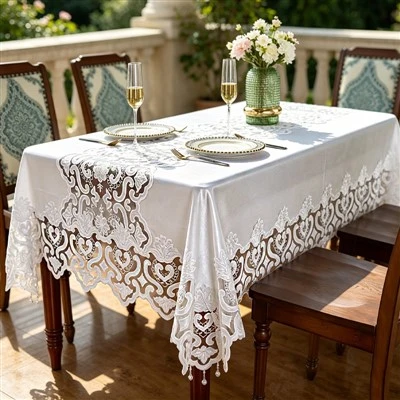
![Velvet Tulle Rectangle Tablecloth]() Velvet Tulle Rectangle TableclothCustomization options:- Customized logo- Customized packaging- Graphic customization- Comprehensive customizationread more
Velvet Tulle Rectangle TableclothCustomization options:- Customized logo- Customized packaging- Graphic customization- Comprehensive customizationread more -
![Fancy Dyed Colorful Blended Cotton Acrylic Yarn]() Fancy Dyed Colorful Blended Cotton Acrylic Yarn🏭 Factory Direct SupplyProduced by an experienced yarn manufacturer with stable quality and export standards.🎨 Customread more
Fancy Dyed Colorful Blended Cotton Acrylic Yarn🏭 Factory Direct SupplyProduced by an experienced yarn manufacturer with stable quality and export standards.🎨 Customread more -
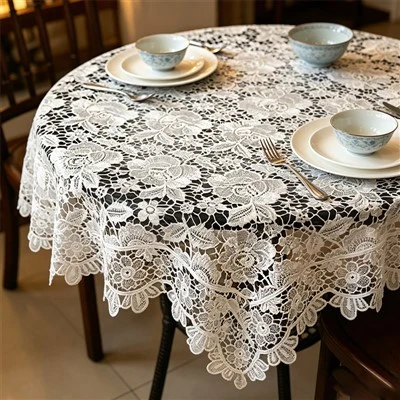
![Floral Embroidered Lace Tablecloth]() Floral Embroidered Lace TableclothCustomization options:- Customized logo- Customized packaging- Graphic customization- Comprehensive customizationread more
Floral Embroidered Lace TableclothCustomization options:- Customized logo- Customized packaging- Graphic customization- Comprehensive customizationread more -
![Polyester Guipure Lace Trim]() Polyester Guipure Lace TrimElevate your designs with our premium polyester lace trim, sold by the yard for ultimate flexibility. Each piece isread more
Polyester Guipure Lace TrimElevate your designs with our premium polyester lace trim, sold by the yard for ultimate flexibility. Each piece isread more -
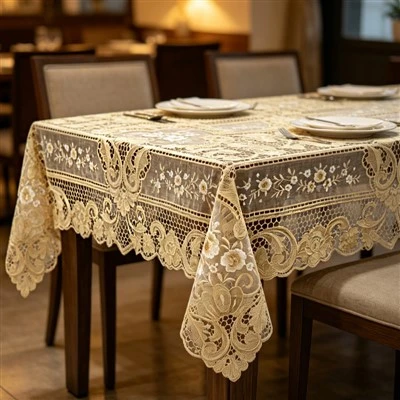
![Floral Embroidered Lace Tablecloth For Home & Hotel Decoration]() Floral Embroidered Lace Tablecloth For Home & Hotel DecorationCustomization options:- Customized logo- Customized packaging- Graphic customization- Comprehensive customizationread more
Floral Embroidered Lace Tablecloth For Home & Hotel DecorationCustomization options:- Customized logo- Customized packaging- Graphic customization- Comprehensive customizationread more -
![100% Acrylic Wool Yarn]() 100% Acrylic Wool YarnFactory DirectSupport factory inspectionSupport OEM/ODMSupport sample serviceread more
100% Acrylic Wool YarnFactory DirectSupport factory inspectionSupport OEM/ODMSupport sample serviceread more