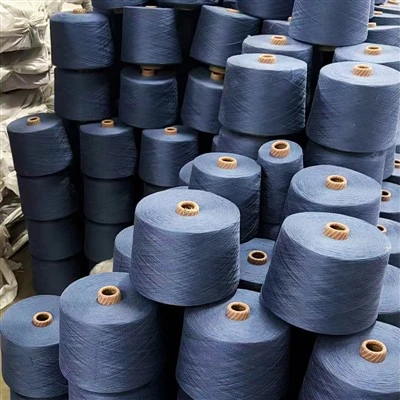
Acrylic fiber is the trade name of polyacrylonitrile fiber in my country. Acrylic fiber has excellent properties and is called "synthetic wool" because its properties are close to wool. Since industrial production in 1950, great development has been achieved. In 1996, the world's total acrylic fiber output was 2.52 million tons, and my country's output was 297,000 tons. In the future, my country will vigorously develop acrylic fiber production. Although acrylic fibers are usually called polyacrylonitrile fibers, acrylonitrile (usually called the first monomer) accounts for only 90% to 94%, the second monomer accounts for 5% to 8%, and the third monomer accounts for 0.3% to 2.0. %. This is because the fiber made of a single acrylonitrile polymer lacks flexibility, is brittle, and is very difficult to dye. In order to overcome these shortcomings of polyacrylonitrile, people use the method of adding a second monomer to make the fiber soft; adding a third monomer to improve the dyeing ability.
1. Acrylic production
The raw material of acrylic fiber is cheap propylene produced by petroleum cracking: because polyacrylonitrile copolymer only decomposes and does not melt when heated above 230C, it cannot be melt-spinned like polyester and nylon fibers, but solution spinning Silk method. Spinning can be dry or wet. The dry spinning speed is high and suitable for spinning imitation silk fabrics. Very spinning is suitable for making short fibers, fluffy and soft, and suitable for making wool-like fabrics.
2. Acrylic fiber properties and uses
Elasticity: Its elasticity is better, second only to polyester and about 2 times higher than nylon. Has good shape retention.
Strength: Although the strength of acrylic fiber is not as good as polyester and nylon, it is 1 to 2.5 times higher than wool.
Heat resistance: The softening temperature of the fiber is 190-230C, second only to polyester among synthetic fibers.
Light resistance: The light resistance of acrylic fiber is the best of all synthetic fibers for one year of outdoor exposure, and the strength is only reduced by 20%.
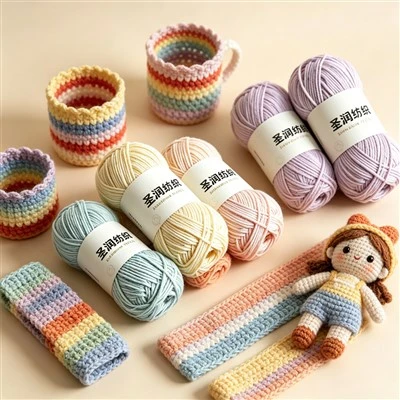
Acrylic fiber is resistant to acids, oxidants and general organic solvents, but it is not resistant to alkalis. Acrylic finished products have good bulkiness, good warmth retention, soft hand feeling, good weather resistance, mildew and moth resistance. The warmth retention of acrylic fiber is about 15% higher than that of wool. Acrylic fiber can be blended with wool, and the products are mostly used for civilian purposes, such as wool, blankets, knitted sportswear, tarpaulins, curtains, artificial fur, plush, etc. Acrylic fiber is also a raw material for high-tech products-carbon fiber.