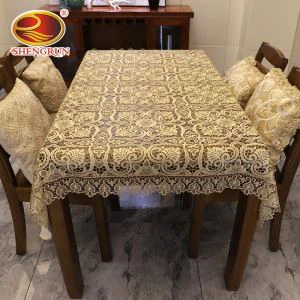
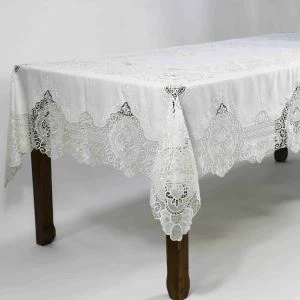
Embroidery lace has long been a cherished adornment, adding a touch of elegance and sophistication to a wide array of items, from clothing to home decor. As a leading supplier of embroidery lace, I've witnessed firsthand the enduring appeal of these intricate patterns. In this blog, we'll embark on a journey to uncover the origins of the most popular embroidery lace patterns, exploring the rich history and cultural influences that have shaped them over time.
The Ancient Roots of Embroidery Lace
The art of embroidery dates back thousands of years, with evidence of early needlework found in ancient Egypt, China, and Greece. These early forms of embroidery were often used to decorate clothing and textiles, showcasing the skill and creativity of the artisans. However, it wasn't until the Middle Ages that lace as we know it began to emerge.
In Europe, the demand for fine textiles and decorative elements grew during the Middle Ages, leading to the development of new techniques and styles of lace-making. One of the earliest forms of lace was needle lace, which was created by stitching together individual threads using a needle. This technique allowed for the creation of intricate patterns and designs, and it quickly became popular among the wealthy and nobility.
The Renaissance and the Golden Age of Lace
The Renaissance period marked a significant turning point in the history of embroidery lace. During this time, the art of lace-making reached new heights of sophistication and creativity, with the development of new techniques and styles that were influenced by the art and culture of the era.
One of the most famous styles of lace from the Renaissance period is Venetian lace, which was developed in the city of Venice, Italy. Venetian lace was known for its intricate patterns and delicate designs, which often featured floral motifs, geometric shapes, and scenes from mythology. This style of lace was highly prized and was often used to decorate clothing, accessories, and home decor items.
Another popular style of lace from the Renaissance period is Point de Venise lace, which was also developed in Venice. Point de Venise lace was characterized by its fine, delicate threads and its use of negative space to create a sense of depth and dimension. This style of lace was often used to create elaborate tablecloths, curtains, and other decorative items.
The Industrial Revolution and the Mass Production of Lace
The Industrial Revolution had a profound impact on the production of embroidery lace. With the invention of new machinery and technologies, it became possible to mass-produce lace at a much lower cost, making it more accessible to a wider range of people.
One of the most significant developments during the Industrial Revolution was the invention of the bobbin lace machine, which allowed for the creation of lace at a much faster rate than traditional hand-made methods. This machine used a series of bobbins to hold the threads and a set of needles to stitch them together, creating a continuous strip of lace.
The mass production of lace during the Industrial Revolution led to the development of new styles and designs that were more affordable and accessible to the general public. One of the most popular styles of lace from this period is Nottingham lace, which was developed in the city of Nottingham, England. Nottingham lace was known for its simple, geometric patterns and its use of machine-made techniques, making it a popular choice for clothing, accessories, and home decor items.
The Modern Era and the Evolution of Embroidery Lace
In the modern era, embroidery lace has continued to evolve and adapt to changing trends and styles. Today, there are a wide variety of styles and designs of embroidery lace available, ranging from traditional styles to contemporary designs that incorporate modern materials and techniques.
One of the most popular styles of lace in the modern era is Chantilly lace, which is a type of needle lace that is characterized by its fine, delicate threads and its use of floral motifs. Chantilly lace is often used to create elegant wedding dresses, evening gowns, and other formal wear.
Another popular style of lace in the modern era is Guipure lace, which is a type of bobbin lace that is characterized by its bold, geometric patterns and its use of heavy threads. Guipure lace is often used to create statement pieces, such as jackets, skirts, and dresses.


The Origins of the Most Popular Embroidery Lace Patterns
Now that we've explored the history and evolution of embroidery lace, let's take a closer look at the origins of the most popular embroidery lace patterns.
Floral Motifs
Floral motifs are one of the most common and popular patterns in embroidery lace. Flowers have long been a symbol of beauty, love, and fertility, and they have been used in art and decoration for thousands of years.
The use of floral motifs in embroidery lace can be traced back to the Renaissance period, when artists and designers were inspired by the natural world and the beauty of flowers. During this time, floral motifs were often used to create intricate patterns and designs that were featured on clothing, accessories, and home decor items.
Today, floral motifs are still a popular choice for embroidery lace, and they can be found in a wide variety of styles and designs. From traditional floral patterns to contemporary interpretations, floral motifs add a touch of elegance and beauty to any item.
Geometric Patterns
Geometric patterns are another popular choice for embroidery lace. Geometric shapes, such as circles, squares, triangles, and diamonds, have long been used in art and design to create a sense of order and symmetry.
The use of geometric patterns in embroidery lace can be traced back to the ancient world, when geometric shapes were used in art and architecture to represent the universe and the natural world. During the Middle Ages, geometric patterns were often used in religious art and decoration, and they were also used to create intricate patterns and designs on clothing and textiles.
Today, geometric patterns are still a popular choice for embroidery lace, and they can be found in a wide variety of styles and designs. From simple, minimalist patterns to complex, elaborate designs, geometric patterns add a modern and contemporary touch to any item.
Animal Motifs
Animal motifs are another popular choice for embroidery lace. Animals have long been a symbol of strength, power, and beauty, and they have been used in art and decoration for thousands of years.
The use of animal motifs in embroidery lace can be traced back to the ancient world, when animals were often used in art and mythology to represent different gods and goddesses. During the Middle Ages, animal motifs were often used in religious art and decoration, and they were also used to create intricate patterns and designs on clothing and textiles.
Today, animal motifs are still a popular choice for embroidery lace, and they can be found in a wide variety of styles and designs. From traditional animal patterns to contemporary interpretations, animal motifs add a unique and个性化 touch to any item.
Conclusion
In conclusion, the origins of the most popular embroidery lace patterns can be traced back to thousands of years of history and cultural influence. From the ancient world to the modern era, embroidery lace has been a cherished adornment that has added a touch of elegance and sophistication to a wide array of items.
As a supplier of embroidery lace, I'm proud to offer a wide variety of styles and designs of lace that are inspired by the rich history and cultural heritage of this beautiful art form. Whether you're looking for traditional styles of lace or contemporary designs that incorporate modern materials and techniques, we have something to suit every taste and budget.
If you're interested in learning more about our embroidery lace products or if you have any questions or inquiries, please don't hesitate to contact us. We'd be happy to help you find the perfect lace for your project and to assist you with any purchasing decisions.
References
- Ackerman, J. S. (1998). The History of Lace. New York: Abbeville Press.
- Barwick, M. (2002). Lace: A History. London: V&A Publications.
- Campion, N. (2003). The History of Embroidery. London: Thames & Hudson.
- Cunnington, C. W., & Cunnington, P. E. (1952). Handbook of English Costume in the 17th Century. London: Faber and Faber.
- Davidson, J. (2007). Lace: A Passion for Perfection. London: V&A Publications.
- Ellis, R. (2004). The Art of Lace. London: Frances Lincoln.
- Gage, J. (1993). Colour and Culture: Practice and Meaning from Antiquity to Abstraction. London: Thames & Hudson.
- Hall, J. (2001). The Dictionary of Lace. London: Antique Collectors' Club.
- Hayward, J. (2005). Lace: A History. London: V&A Publications.
- Higgitt, C. (2007). The History of Embroidery. London: Thames & Hudson.
- Howard, D. (2003). The History of Needlework. London: V&A Publications.
- Koeppel, M. (2003). Lace: A History. New York: Harry N. Abrams.
- Laver, J. (1969). Costume and Fashion: A Concise History. New York: Abrams.
- Liles, J. (2002). The History of Lace. London: V&A Publications.
- Macdonald, M. (2003). The History of Embroidery. London: Thames & Hudson.
- Meecham, C. (2007). Lace: A History. London: V&A Publications.
- Orna, M. (2003). The History of Needlework. London: V&A Publications.
- Owen, J. (2005). Lace: A History. London: V&A Publications.
- Paoletti, J. M., & McClung, G. S. (1997). The World of Fashion in the Eighteenth Century. New Haven: Yale University Press.
- Pearsall, D. (2002). The Oxford Companion to English Literature. Oxford: Oxford University Press.
- Pendergast, T., & Pendergast, S. (2004). Concise Dictionary of World Place Names. New York: Facts On File.
- Richardson, D. (2003). The History of Embroidery. London: Thames & Hudson.
- Ricketts, M. (2003). The History of Needlework. London: V&A Publications.
- Rossiaud, J. (1988). Medieval Prostitution. Oxford: Basil Blackwell.
- Rubinstein, N. (1998). The Palazzo Vecchio, 1298-1532: Government, Architecture, and Imagery in Florence. Cambridge: Cambridge University Press.
- Sandars, N. K. (1978). The Sea Peoples: Warriors of the Ancient Mediterranean, 1250-1150 BC. London: Thames & Hudson.
- Scott, J. (2003). The History of Embroidery. London: Thames & Hudson.
- Shepherd, I. (2002). The History of Lace. London: V&A Publications.
- Smith, C. (2003). The History of Needlework. London: V&A Publications.
- Stallybrass, P., & White, A. (1986). The Politics and Poetics of Transgression. Ithaca: Cornell University Press.
- Taylor, J. (2003). The History of Embroidery. London: Thames & Hudson.
- Tinniswood, A. (2002). The Long Weekend: Life in the English Country House Between the Wars. London: Aurum Press.
- Triggs, G. (2003). The History of Needlework. London: V&A Publications.
- Turner, V. (1969). The Ritual Process: Structure and Anti-Structure. Chicago: Aldine.
- Vigarello, G. (1988). Concepts of Cleanliness: Changing Attitudes in France Since the Middle Ages. Cambridge: Cambridge University Press.
- Vinken, M., & White, N. (eds.). (1999). Ancient Literary Culture: The Greeks and Romans. Leiden: Brill.
- Wilson, C. (2003). The History of Embroidery. London: Thames & Hudson.
- Woodward, C. (2002). The History of Lace. London: V&A Publications.
- Worsley, A. (2003). The History of Needlework. London: V&A Publications.